

Houndsome
Dog Coat Galah
Dog Coat Galah
Gift with purchase
Complimentary Birdie collar, valued at $49, with Australian orders over $180.
Choose your Birdie collar and add it to cart. Discount applies at checkout.
Birdie collar gift terms
A complimentary Birdie collar is available with Australian orders over $180, while stock lasts. Please add your chosen Birdie collar to cart and the discount will apply automatically at checkout. One complimentary collar per order. Excludes gift cards and previous purchases. Cannot be combined with other discount codes or promotional offers, except eligible free shipping. Not redeemable for cash. If your order is returned below the qualifying spend, the collar must also be returned or its value may be deducted from your refund.
Couldn't load pickup availability
The Duncan Sportcoat in Galah puts a bold spin on a classic check, blending pink, black, grey and orange for a colourway that stands out without trying too hard. The outer is a soft merino blend made with Australian merino wool, giving natural breathability and comfort through the cooler months.
Inside, a pink premium velour lining adds extra warmth, with a smooth, anti-friction finish designed to help reduce fur catching or matting. Secured with Velcro®, the chest and neck straps are fully adjustable for a snug, comfy fit. A harness opening on the centre-back seam at the shoulder point makes it easy to clip on your lead and head out the door.
It looks polished, but comfort always comes first. The Duncan Sportcoat is designed with your dog’s wellbeing at the centre of every detail.
To keep it looking fresh, secure the Velcro® straps and gently machine wash in cold water using a mild wool soap. Dry on the line, and never tumble dry or bleach.
Maisy (Welsh Terrier) wears Small
Fozzie (Welsh Terrier) wears Medium
The right size for your dog (measurements in cms)

| Size | Neck girth | Chest girth | Coat back length | Breeds (guide only) |
|
XXS |
18-22 | 30-39 | 28 | Yorkie, Chihuahua, Shih tzu Maltase, Toy Poodle |
| XS | 23-30 | 40-47 | 33 | Shih tzu, Bichon, Yorkie, Jack Russell |
| S | 31-38 | 48-56 | 38 | Mini Schnauzer, Pug, French Bulldog |
| M | 39-48 | 57-67 | 43 | Cocker Spaniel, Beagle, Spoodle, Boston Terrier |
| L | 49-57 | 68-76 | 48 | Dalmatian, Boxer |
|
XL |
58-68 | 77-88 | 53 | Vizsla, Weimaraner |
Watch video: How to measure your dog for size
Provenance
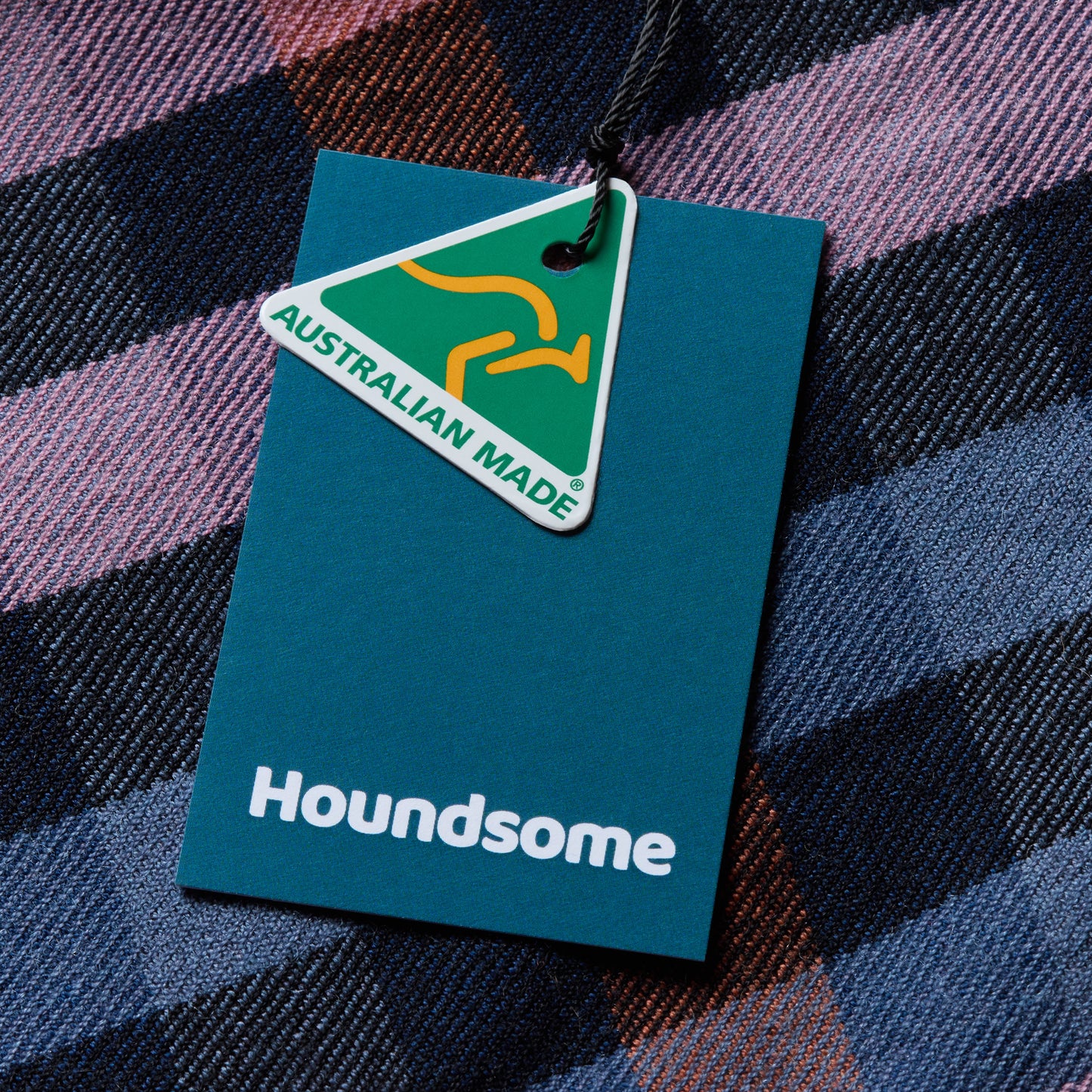
Hand cut and machine sewn by our makers in Melbourne, the Galah fabric is an Australian made wool blend woven in Geelong by Loomtex Mills using Australian merino, and sourced through a circular-economy supplier specialising in designer deadstock. Deadstock fabrics are unused lengths left over from fashion production. Too often, they become waste. By choosing Galah, you’re helping keep high-quality materials in use for longer and reducing demand for newly produced fabric, which can save raw materials, water, energy, and chemical inputs.